Andean slopes across the country, up to about 2,000 m.
👀 Look
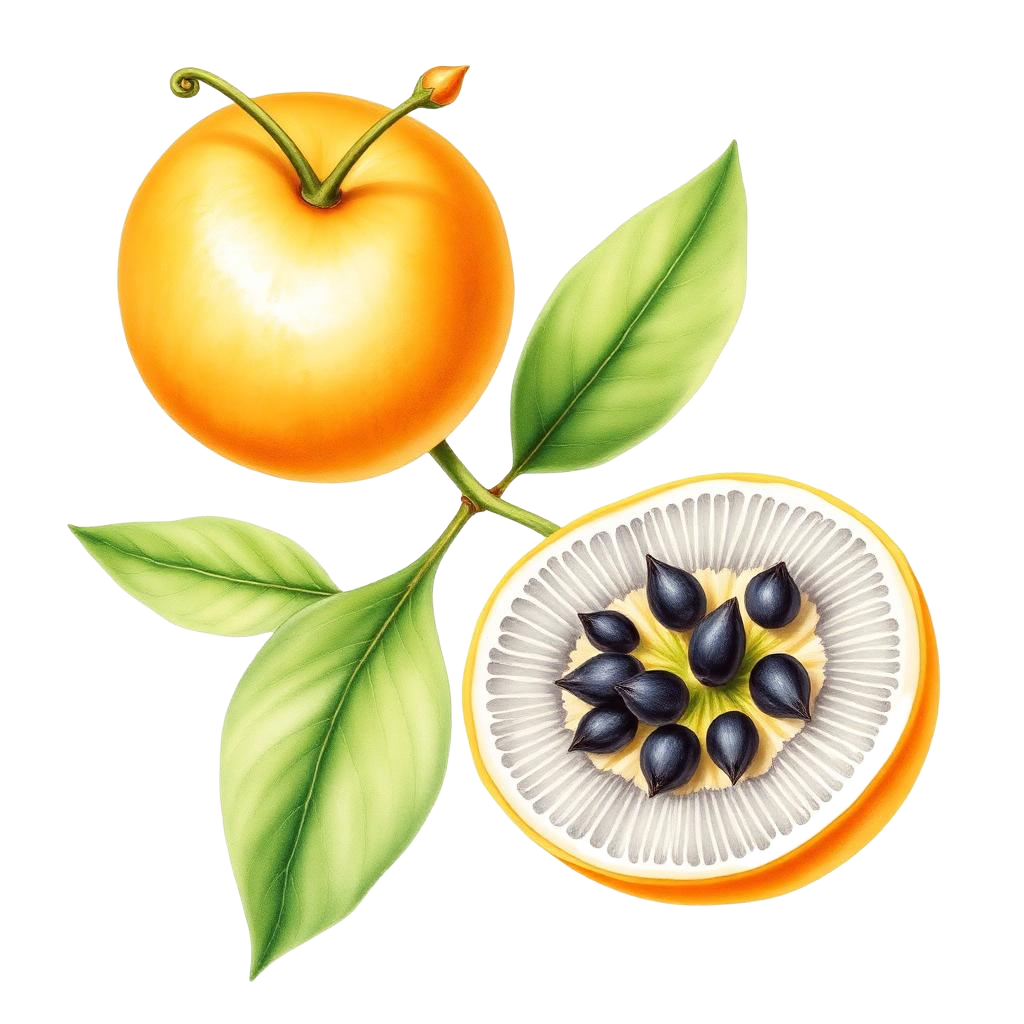
An orange, speckled shell on a long stem, hard like thin plastic. Crack it open: a pouch of grey, jelly-coated seeds that looks alarming and tastes like heaven.
👃 Aroma
Delicately sweet and floral.
👅 Taste
Pure gentle sweetness — honeyed melon and pear over soft floral notes, zero acid. The "gateway passionfruit."
Sweetness: ⭐⭐⭐⭐⭐
🍽️ How to eat it
Crack the shell with a squeeze or a knuckle rap, peel back, and slurp the seeds straight — they pop pleasantly. Kids eat it with a spoon. Tourist mistake: being scared of the frog-egg look, or spitting the (perfectly edible) seeds.
🧃 Drinks
Rarely juiced — too subtle and too beloved fresh.
🏪 Buying tips
Deeper orange with dark speckles = sweeter. Shell dents mean nothing; cracks do. Keeps for days at room temperature.
💰 Price
SIPSA (Colombia's official farm-price monitor) reported a Medellín average around 6.500 COP/kg in early 2026 → figure 1.000–2.000 COP per fruit retail. Typical market price.
🌎 Local lore
The traditional first fruit for Colombian babies — soft, sweet, and gentle on the stomach. Grandmothers consider it practically medicine.
⚠️ Watch out
None to speak of. The easiest exotic in the market.
🎉 Fun fact
The name is a Spanish diminutive meaning "little pomegranate," coined by colonists who thought the seed-filled interior resembled one. It is a climbing vine whose flower Spanish missionaries read as a symbol of the Passion of Christ, hence "passion flower."