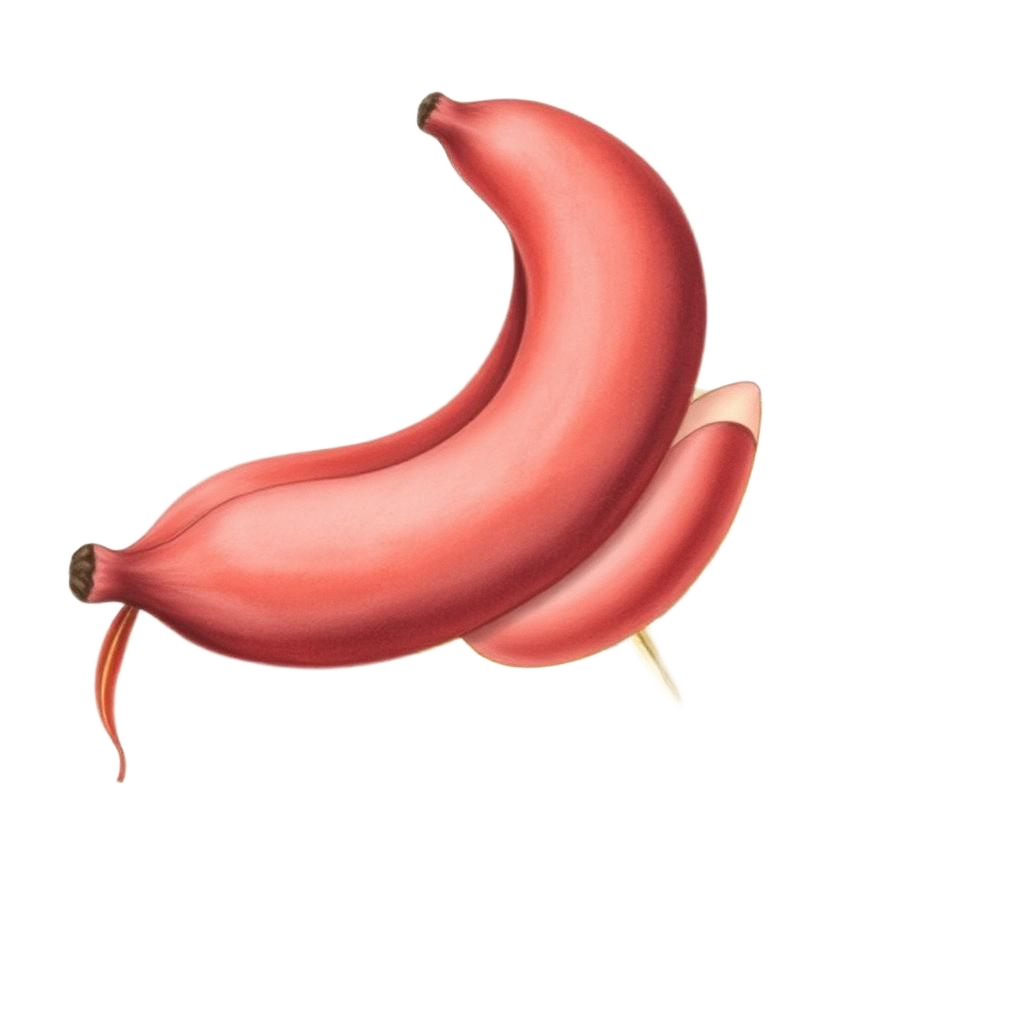
Bananas are Southeast Asian domesticates; the red type is grown across Colombia's warm lowlands.
Elsewhere in the world: Also grown in Ecuador, Costa Rica, Brazil and India.
Altitude: 0–1,500 m
01k2k3k4k5k m
Where it grows wildWhere it's farmed todayMedellín
👀 Look
Chubby maroon-red bananas, shorter and plumper than the yellow kind, hanging in bunches from stall hooks. Cream-to-peach flesh.
👃 Aroma
Banana plus berries.
👅 Taste
Sweeter and denser than a Cavendish, with a raspberry whisper.
Sweetness: ⭐⭐⭐⭐⭐
🍽️ How to eat it
Out of hand, or sliced into breakfast. Ripe when the red dulls and the fruit gives slightly.
🧃 Drinks
Any batido (milk smoothie) upgrades instantly with red banana.
🏪 Buying tips
Deep red-purple with slight give; black spots = extra sweet, not spoiled.
💰 Price
Bananas run cheap here — criollo types wholesale at 1.600–1.800/kg; reds slightly more. ~2.000–3.500 COP/kg. Typical market price.
🌎 Local lore
Colombia's banana universe is vast — murrapo and banano bocadillo (finger bananas), guineo, hartón… And the word Gabriel García Márquez immortalized as his fictional town, Macondo, came straight from this world: it was the name of a real banana plantation near his childhood home in Aracataca (and, locally, of a tree, Cavanillesia platanifolia). One Hundred Years of Solitude grew, quite literally, on a banana farm.
⚠️ Watch out
None. It's a banana.
🎉 Fun fact
A banana plant is the world's largest herb — not a tree — and the fruit is botanically a berry; the red skin comes from extra carotenoid pigments. Red bananas are richer in beta-carotene (a vitamin-A precursor) and vitamin C than the common yellow Cavendish.
⭐ Worth trying?
⭐⭐⭐⭐☆ An easy, excellent snack — and grab a hand of tiny murrapos too.