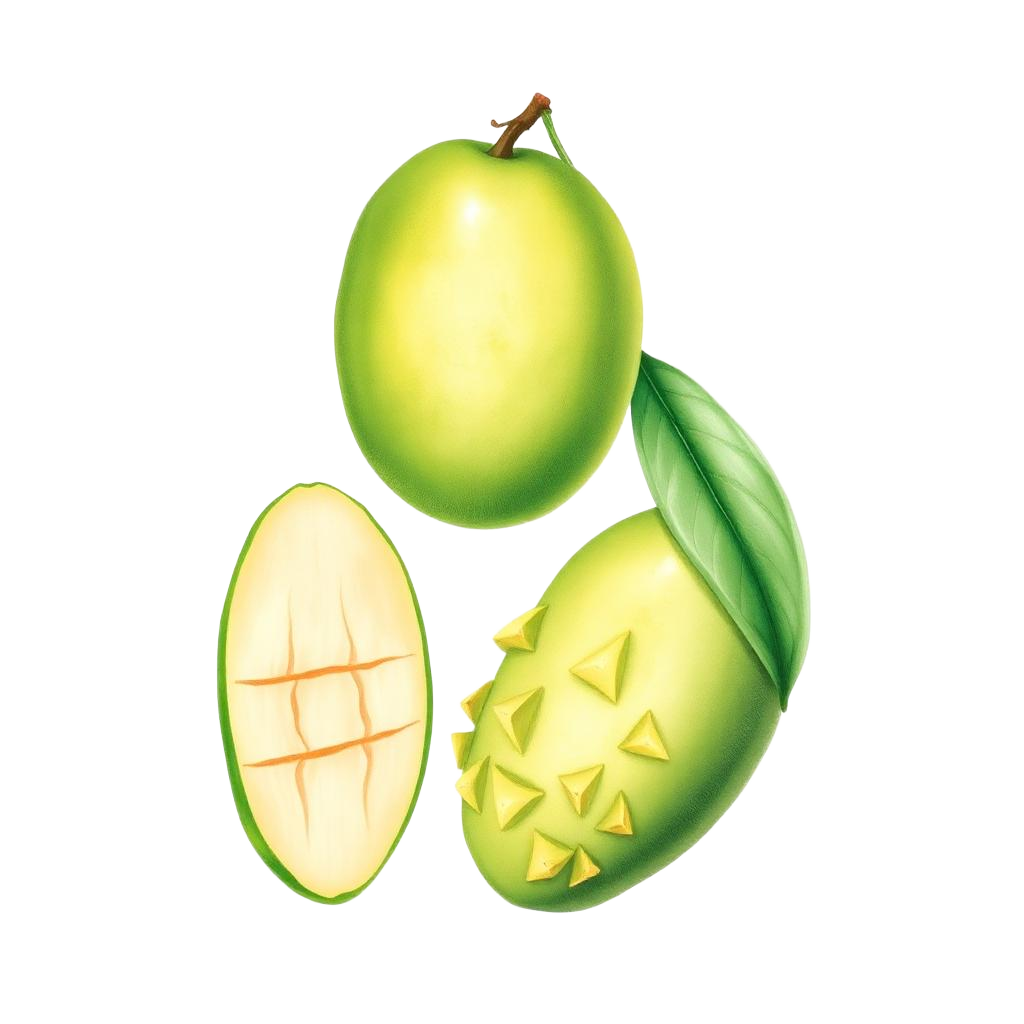
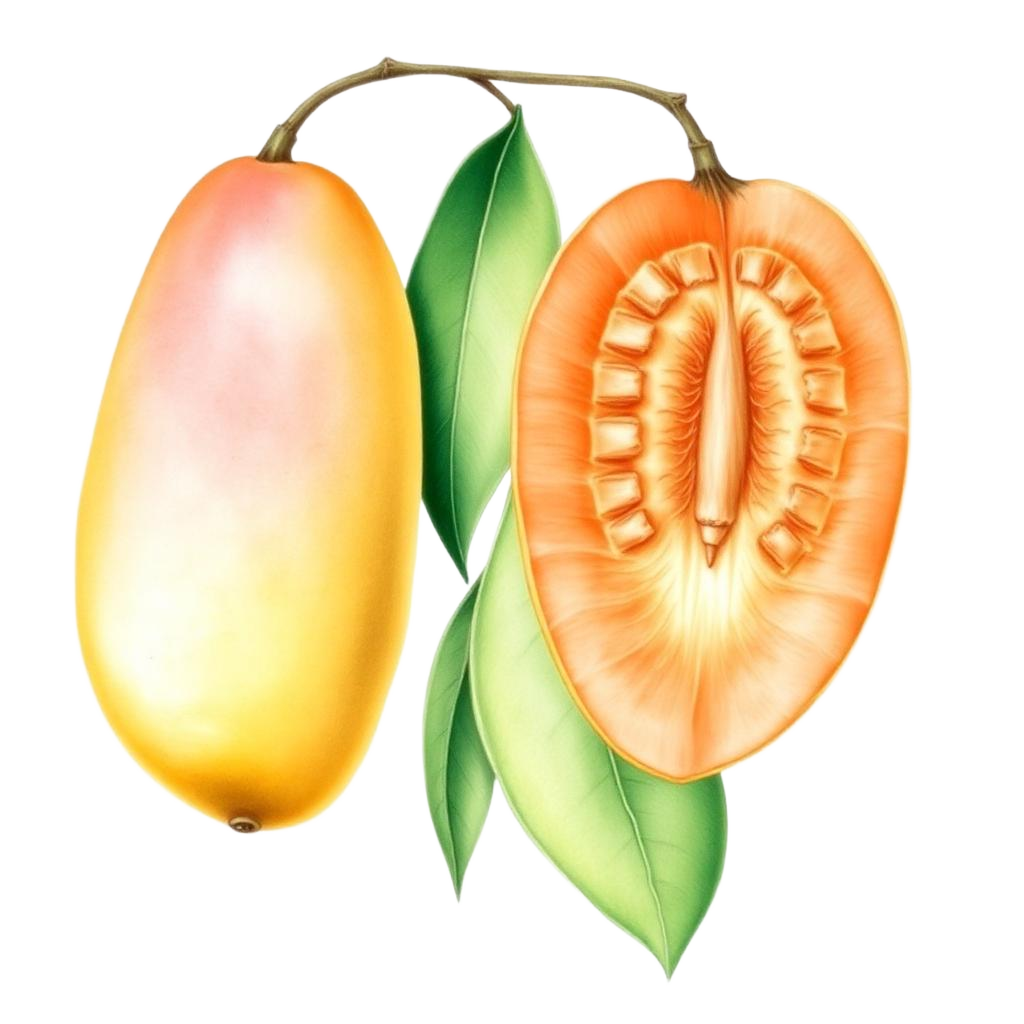
Mango comes from South Asia; 'biche' is any Colombian mango picked green, from the coast to warm inland valleys.
Elsewhere in the world: Also grown in India, Mexico, Brazil, Thailand, the Philippines and Pakistan.
Altitude: 0–1,200 m
01k2k3k4k5k m
Where it grows wildWhere it's farmed todayMedellín
👀 Look
Hard green mango, sold sliced into pale crescents in cups or bags.
👃 Aroma
Green, resinous, faintly piney.
👅 Taste
Crunchy, mouth-wateringly sour — a Granny Smith apple's tropical cousin.
Sweetness: ⭐☆☆☆☆
🍽️ How to eat it
Sliced and doused with salt and lime (and often pepper) from a street cart. This is Colombia's answer to sour candy. Tourist mistake: skipping the salt — the salt is the point.
🧃 Drinks
Jugo de mango biche — a startling, salty-sour green juice with a devoted following; some stalls do a mango biche smoothie with lime.
🏪 Buying tips
Rock-hard, deep green fruit; or just buy the ready-cut cup with the fixings.
💰 Price
Street cups typically 3.000–5.000 COP. Typical market price.
🌎 Local lore
School gates across Colombia have a mango biche cart outside — it's the taste of recess. Officially a fruit; culturally a snack food.
⚠️ Watch out
Serious acid — pace yourself. Since it's eaten skin-on, note that mango skin and sap can irritate the lips of people allergic to the cashew/poison-ivy family (Anacardiaceae).
🎉 Fun fact
Unripe green mango actually holds more vitamin C than the ripe fruit — and sun-dried and ground, it becomes amchur, the tangy souring spice of Indian cooking.