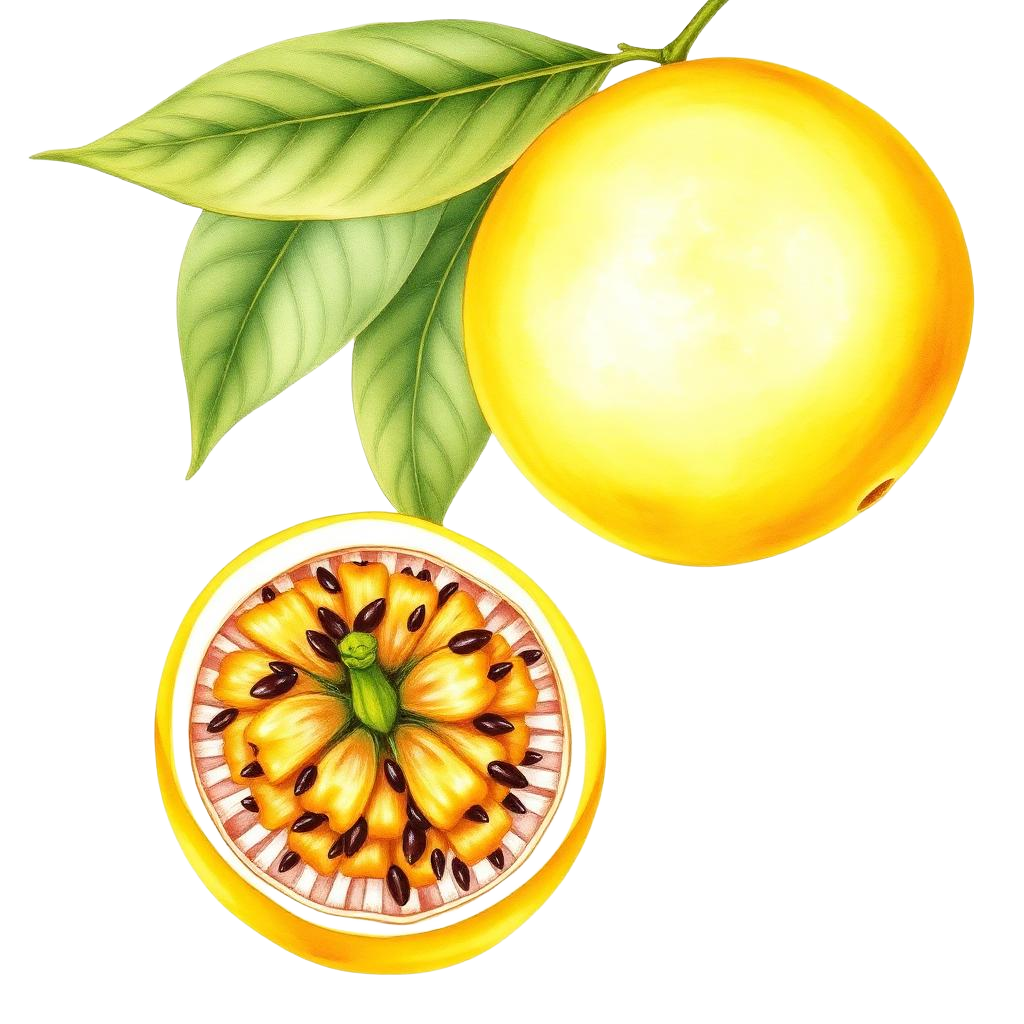
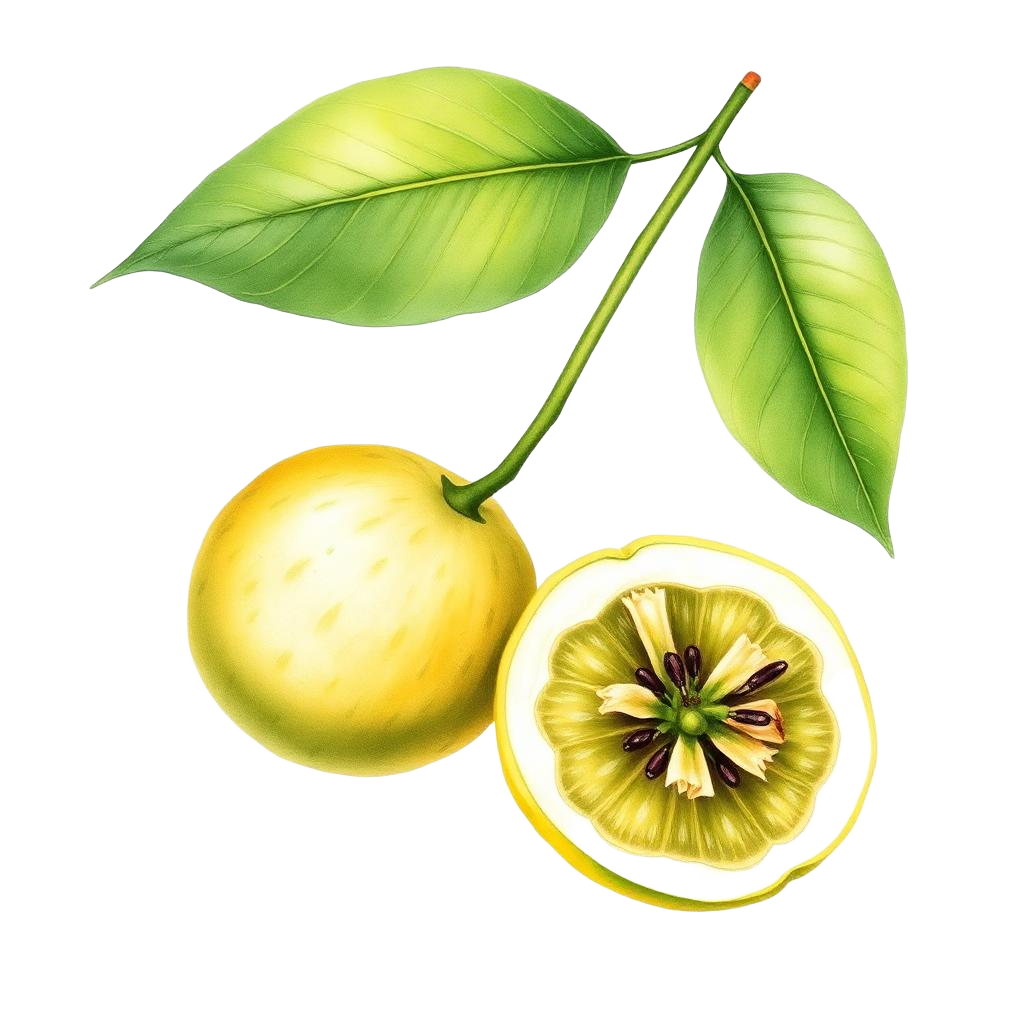
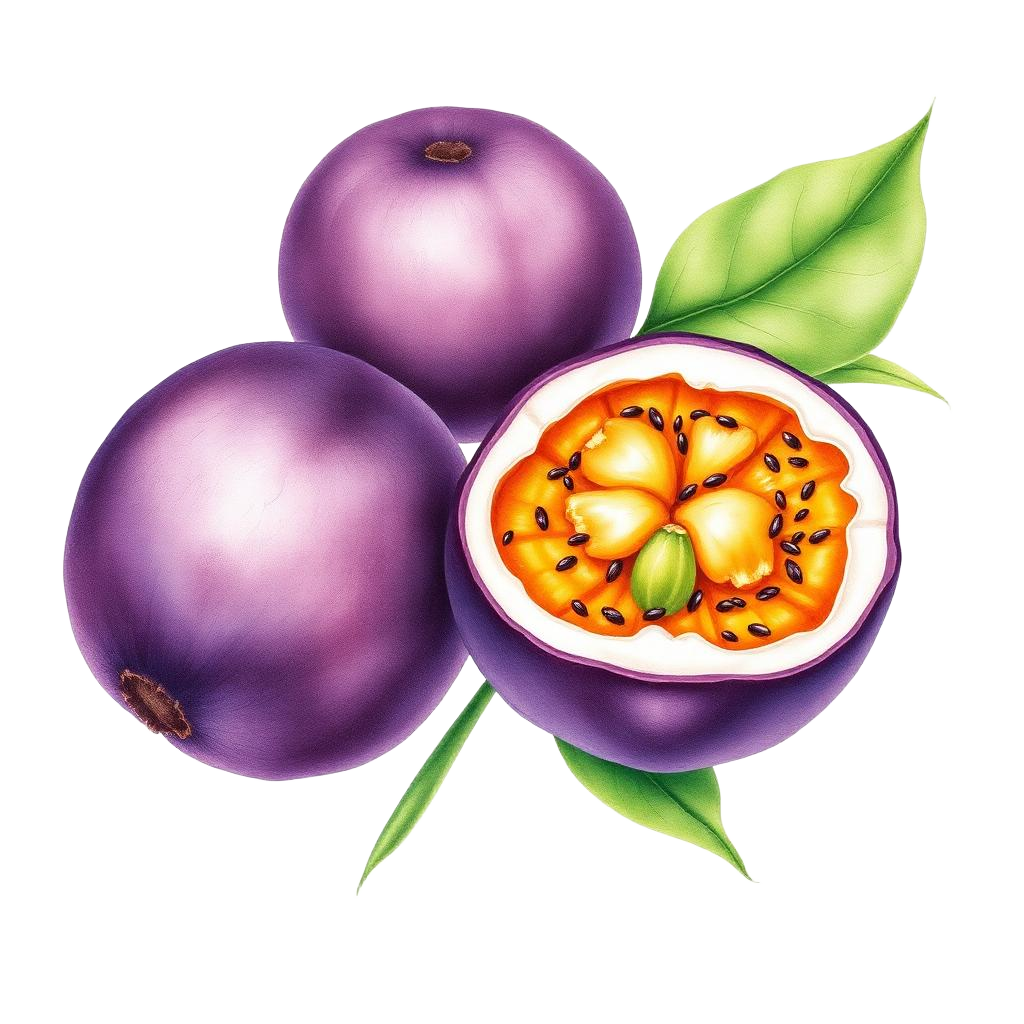
From tropical South America (Brazil); grown across Colombia's warm lowlands.
Elsewhere in the world: Also grown in Ecuador, Peru, Vietnam, Indonesia, India and Kenya.
Altitude: 0–1,300 m
01k2k3k4k5k m
Where it grows wildWhere it's farmed todayMedellín
👀 Look
A wrinkly yellow ball (smooth when underripe) the size of a large lemon. Inside, golden pulp-coated seeds swimming in intensely aromatic juice.
👃 Aroma
The tropical perfume — sharp, floral, unmistakable passionfruit.
👅 Taste
Explosive tartness with pineapple-citrus depth; sweetness only appears when fully wrinkled.
Sweetness: ⭐⭐☆☆☆
🍽️ How to eat it
Almost exclusively as juice; the brave spoon it straight with sugar. Tourist mistake: eating a smooth (unripe) one raw and losing an eyebrow to the acidity.
🧃 Drinks
Jugo de maracuyá in water is the thirst-killer of the tropics; maracuyá en leche is a creamy cult favorite (milk tames the acid beautifully). Found at every juice stall in the country.
🏪 Buying tips
Wrinkled, heavy fruit = ripe and sweet-tart. Smooth and light = sour and underfilled. Ripens fine on the counter.
Spanish missionaries named the flower for the Passion of Christ — crown of thorns in the filaments, nails in the styles. Colombia grows enough to be a major pulp exporter.
⚠️ Watch out
Very acidic solo; hard on sensitive stomachs when unripe.
🎉 Fun fact
Each passionflower blooms for a single day, and the yellow form can't pollinate itself — it depends almost entirely on big carpenter bees to set fruit. The flower changes shape through the day as its stigmas bend downward, so hand-pollinating in the afternoon greatly raises fruit set.
⭐ Worth trying?
⭐⭐⭐⭐⭐ At minimum as juice — with milk, if you trust us.