Native to southern Brazil, Paraguay and northern Argentina; thrives in Colombia's cool Andes.
Elsewhere in the world: Also grown in Kenya, South Africa, Australia and New Zealand.
Altitude: 1,400–2,200 m
01k2k3k4k5k m
Where it grows wildWhere it's farmed todayMedellín
👀 Look
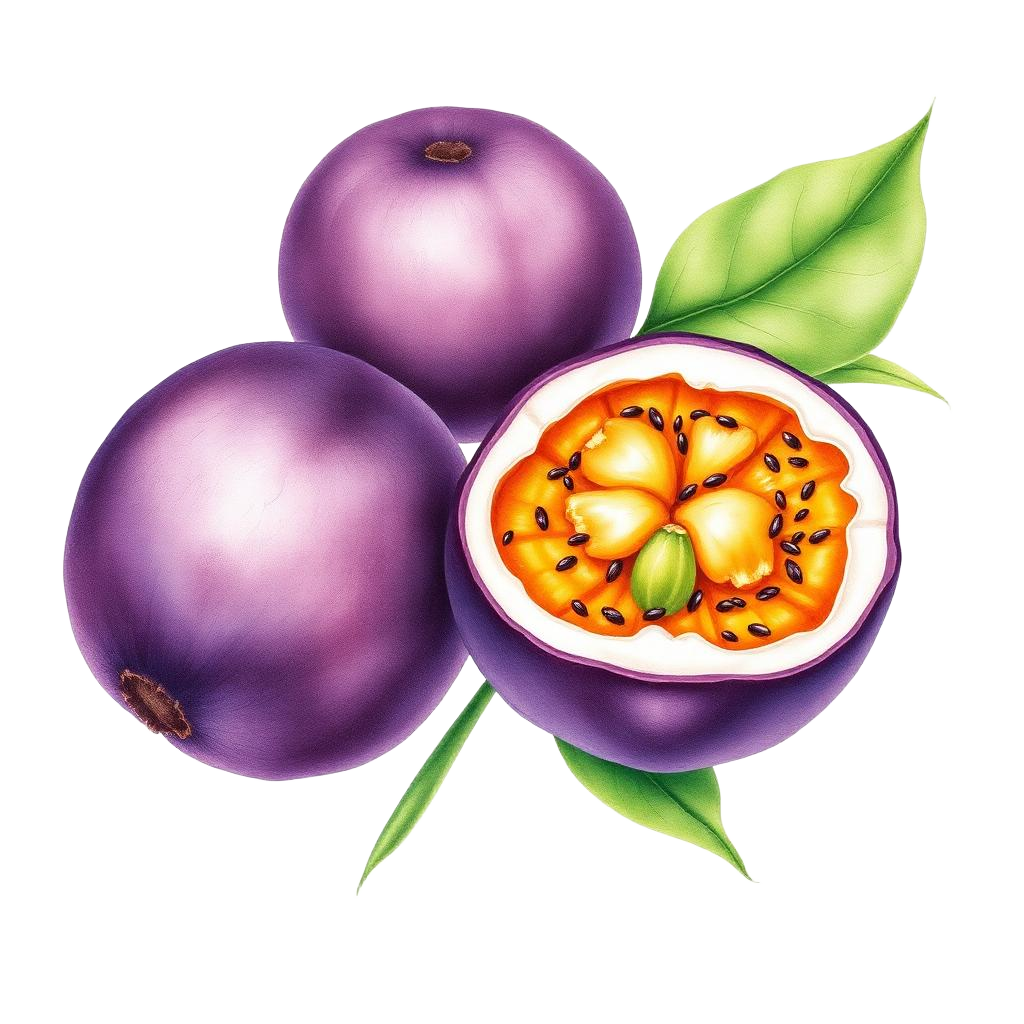
A dark purple, plum-sized sphere that wrinkles like a raisin when ripe. Inside: orange jelly-covered seeds, more perfumed and less watery than maracuyá.
👃 Aroma
Intensely floral-tropical; sweeter than maracuyá.
👅 Taste
The refined sibling — passionfruit intensity with real sweetness behind it. Orange-apricot notes, moderate acid.
Sweetness: ⭐⭐⭐☆☆
🍽️ How to eat it
Halved and spooned straight — no sugar needed when wrinkly-ripe. Also spectacular over yogurt.
🧃 Drinks
Jugo de gulupa where available — deeper and rounder than maracuyá juice.
🏪 Buying tips
Wrinkles are a feature: smooth = sour, dimpled = perfect. Heavy for its size. Travels well.
💰 Price
Commonly 8.000–12.000 COP/kg retail — pricier than maracuyá because export demand is fierce. Typical market price.
🌎 Local lore
Alongside uchuva, gulupa is one of Colombia's top exotic fruit exports, air-freighted to European supermarkets. Locals joke the best ones leave the country — the Minorista proves otherwise.
⚠️ Watch out
None serious. Seeds are edible.
🎉 Fun fact
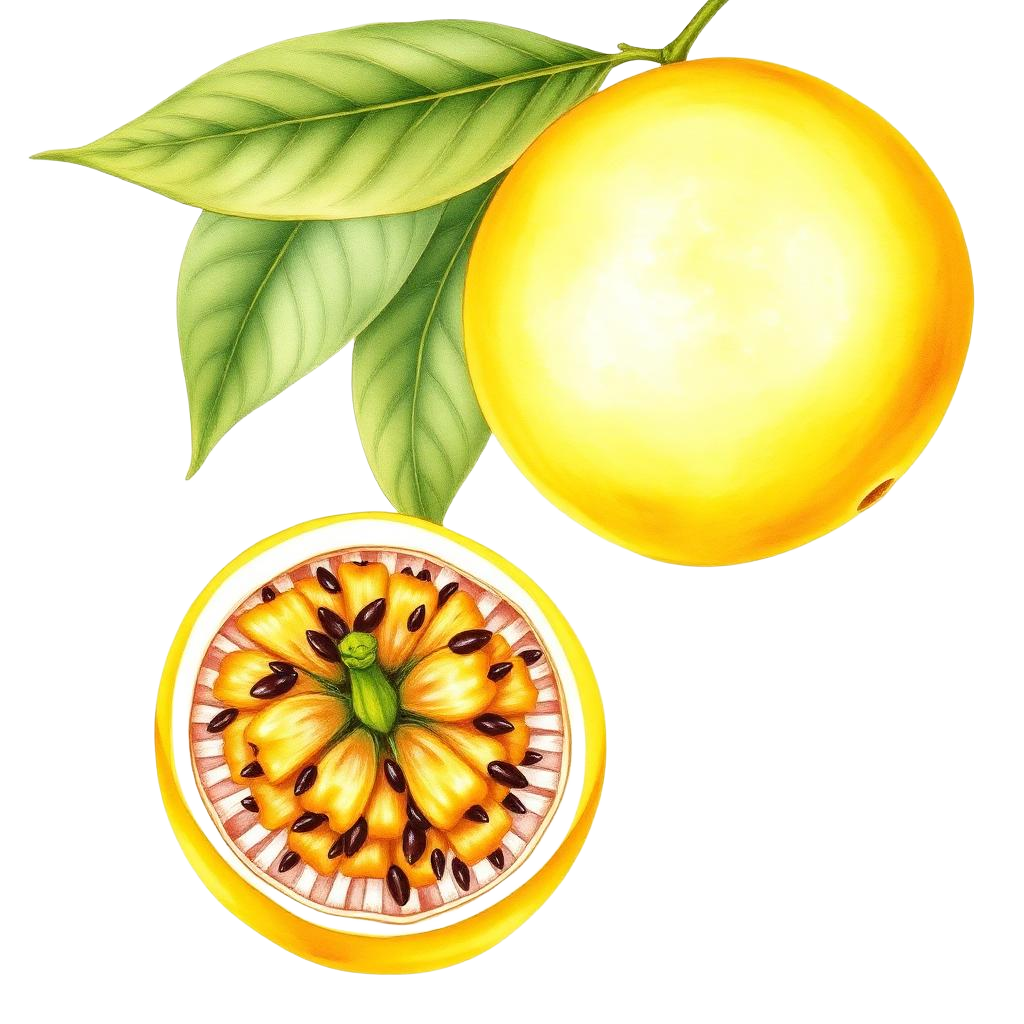
It is genetically the very same species Botanist John Sims first described as Passiflora edulis in 1818 — the purple original; yellow maracuyá is the mutant offshoot. Gulupa and uchuva are Colombia's two flagship "exotic" fruits air-freighted to Europe.
⭐ Worth trying?
⭐⭐⭐⭐⭐ The best raw-eating passionfruit in the building.