Back
Colombian native Hardest to find abroad

Uva caimarona

Pourouma cecropiifolia
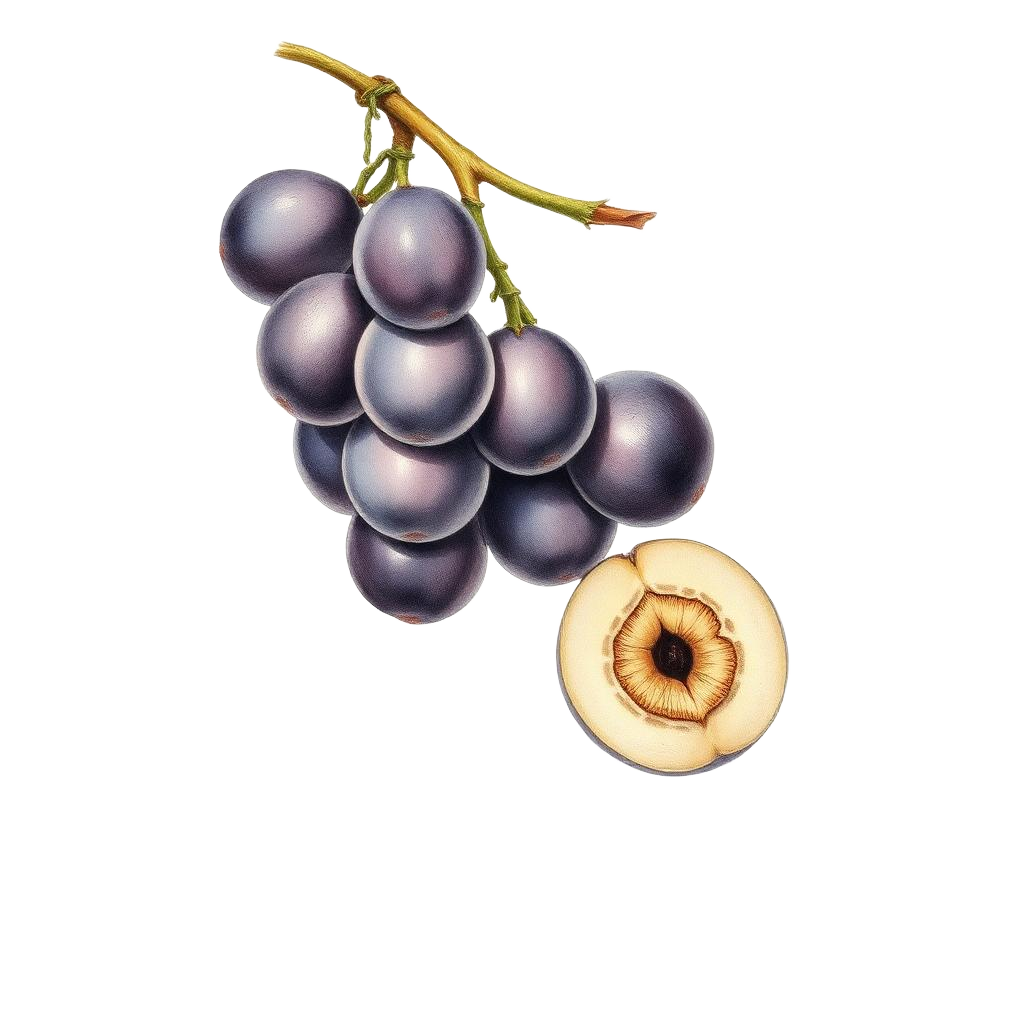
Uva caimarona botanical illustration
Uva caimarona real fruit photo
Field guide
Illustration
🗓️ Season
J
F
M
A
M
J
J
A
S
O
N
D

● peak · ○ available · — scarce

Recent visitors (last 30 days)

Be the first to log a sighting

👀 Look

These large, round fruits resemble oversized grapes, with a deep purple to black skin that can be slightly fuzzy.

👃 Aroma

The aroma is subtly musky and earthy, with a hint of sweetness that becomes more pronounced when fully ripe.

👅 Taste

The pulp is juicy and sweet, with a unique musky undertone and a slightly tart finish.

Sweetness: ⭐⭐⭐⭐☆

🍽️ How to eat it
Locals primarily enjoy Uva caimarona fresh, often straight from the tree, or in refreshing juices and desserts.
🧃 Drinks
It makes an excellent, deeply colored juice, often blended with a touch of lime to balance its sweetness.
🥤 Best uses
Fresh ★★★★★ · Juice ★★★★★ · Smoothie ★★★★☆ · Dessert ★★★☆☆ · Ice cream ★★★☆☆
🏪 Buying tips
Look for fruits that are uniformly dark purple, slightly soft to the touch, and free of blemishes. Avoid any with green patches or a hard texture.
💰 Price
8.000-15.000 COP/kg
🌎 Local lore
In the Amazon, Uva caimarona is a cherished fruit, often gathered by indigenous communities and considered a vital part of their diet.
⚠️ Watch out

The fruit contains a large, inedible seed, so be mindful when eating it fresh. Its musky flavor might be an acquired taste for some.

🎉 Fun fact
Despite its name, the Uva caimarona is not a true grape — it belongs to the Urticaceae (formerly Cecropiaceae) and is a close relative of the Cecropia trees, not of figs. Its ripe fruit is often described as tasting like a cross between grape and root beer.
Worth trying?

⭐⭐⭐ A fun Amazonian rarity; try it if you spot it.