The hot, dry country — the Caribbean coast and warm inter-Andean valleys like the Magdalena.
👀 Look
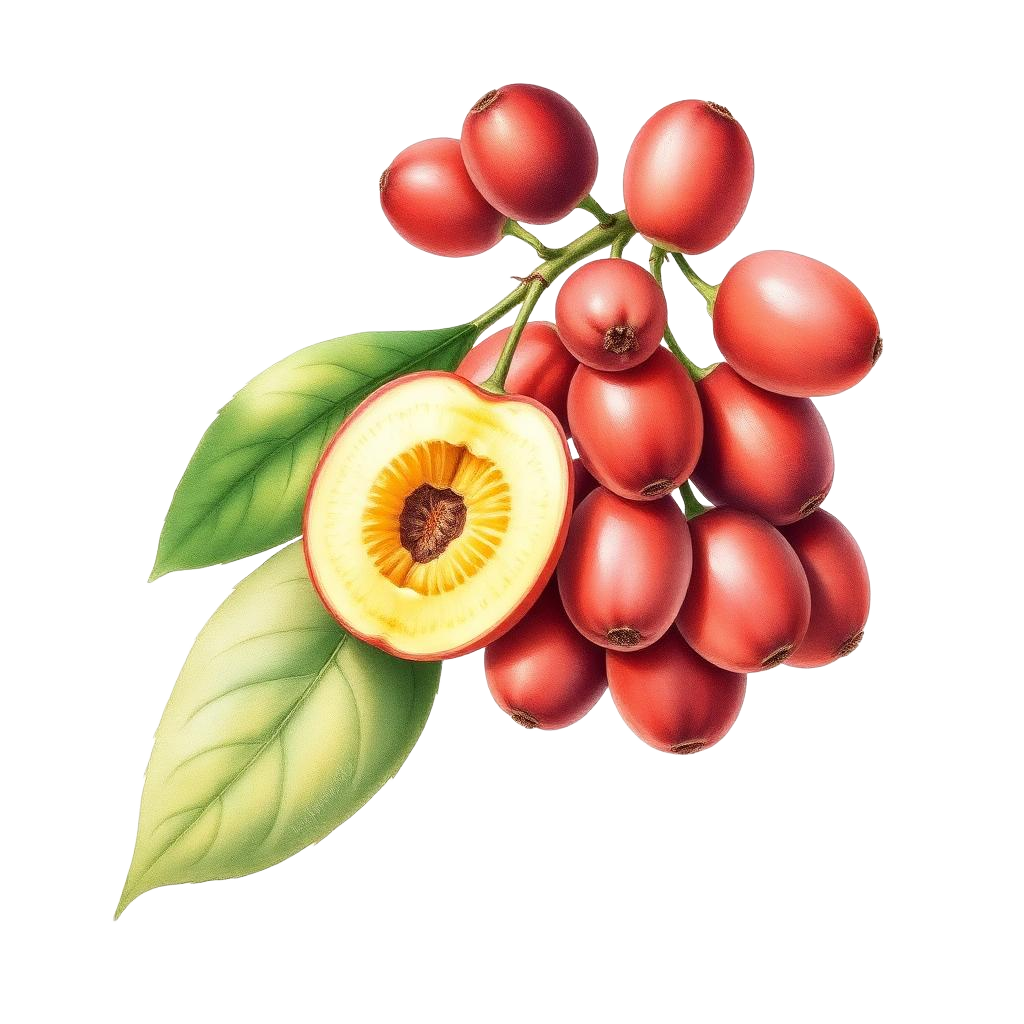
A shiny crimson mini-plum, thumb-sized, with taut skin over yellow flesh and one large fibrous pit.
👃 Aroma
Sweet plum skin with a green edge.
👅 Taste
Plum + mango + citrus peel; sweet-tart with a resiny finish.
Sweetness: ⭐⭐⭐☆☆
🍽️ How to eat it
Popped whole, worked around the pit, pit discarded — repeat twenty times. Also eaten green with salt (calentano style) and made into juices and dulces.
🧃 Drinks
Jugo de ciruela where the harvest is generous.
🏪 Buying tips
Deep red, taut, unwrinkled skin. They don't ripen much after picking.
💰 Price
600 COP (our vendor's quote — cheapest thing on the sheet). Confirm unit.
🌎 Local lore
"Calentana" means from the tierra caliente — the hot country. The trees grow from planted branches so easily that fences of living ciruela trees line hot-country roads.
⚠️ Watch out
Big pit — mind your teeth, and it's another one to keep from small kids.
🎉 Fun fact
It's a Spondias, in the mango-and-cashew family — a tiny plum-shaped cousin of the mango sold three stalls over. It is almost never grown from seed but propagated by sticking cut branches in the ground, which is why living fences of ciruela line hot-country roads.