Cold high-Andean zones, such as Boyacá, Cundinamarca and Nariño.
👀 Look
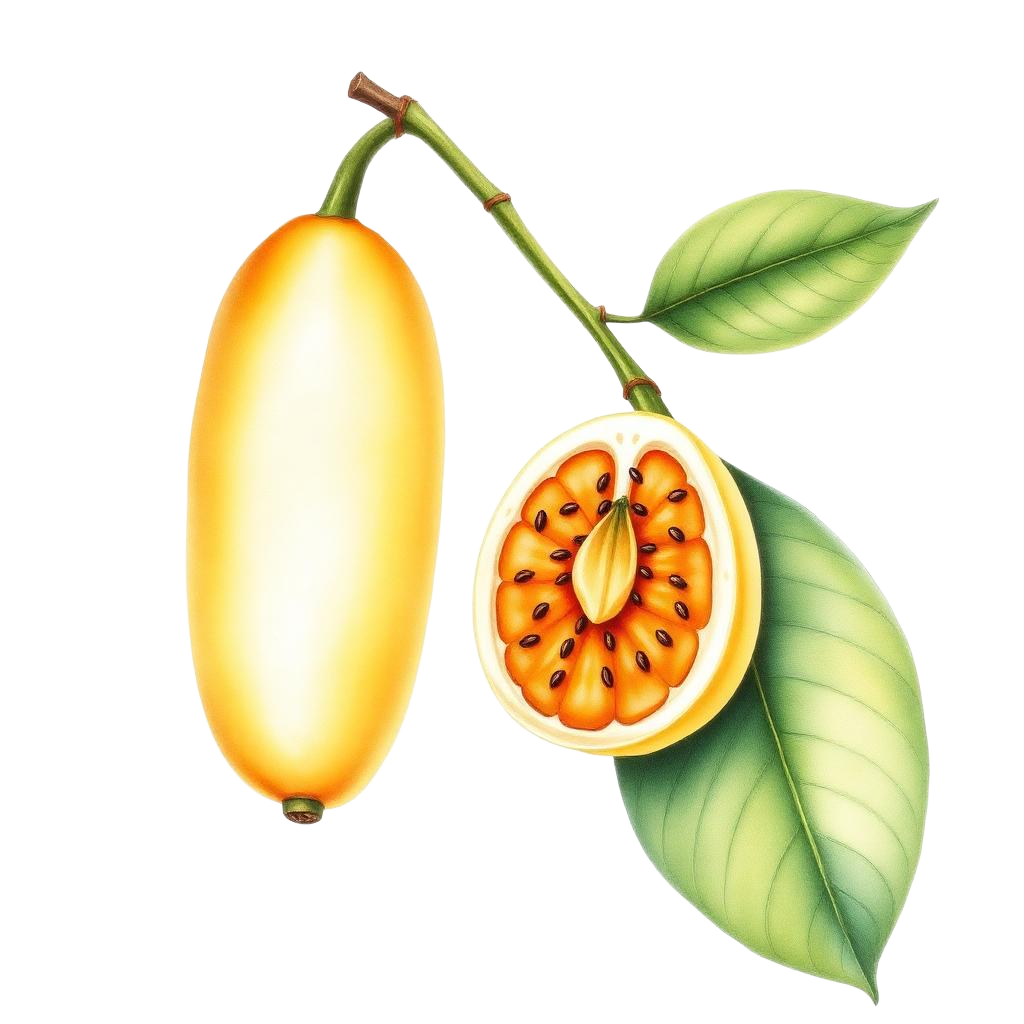
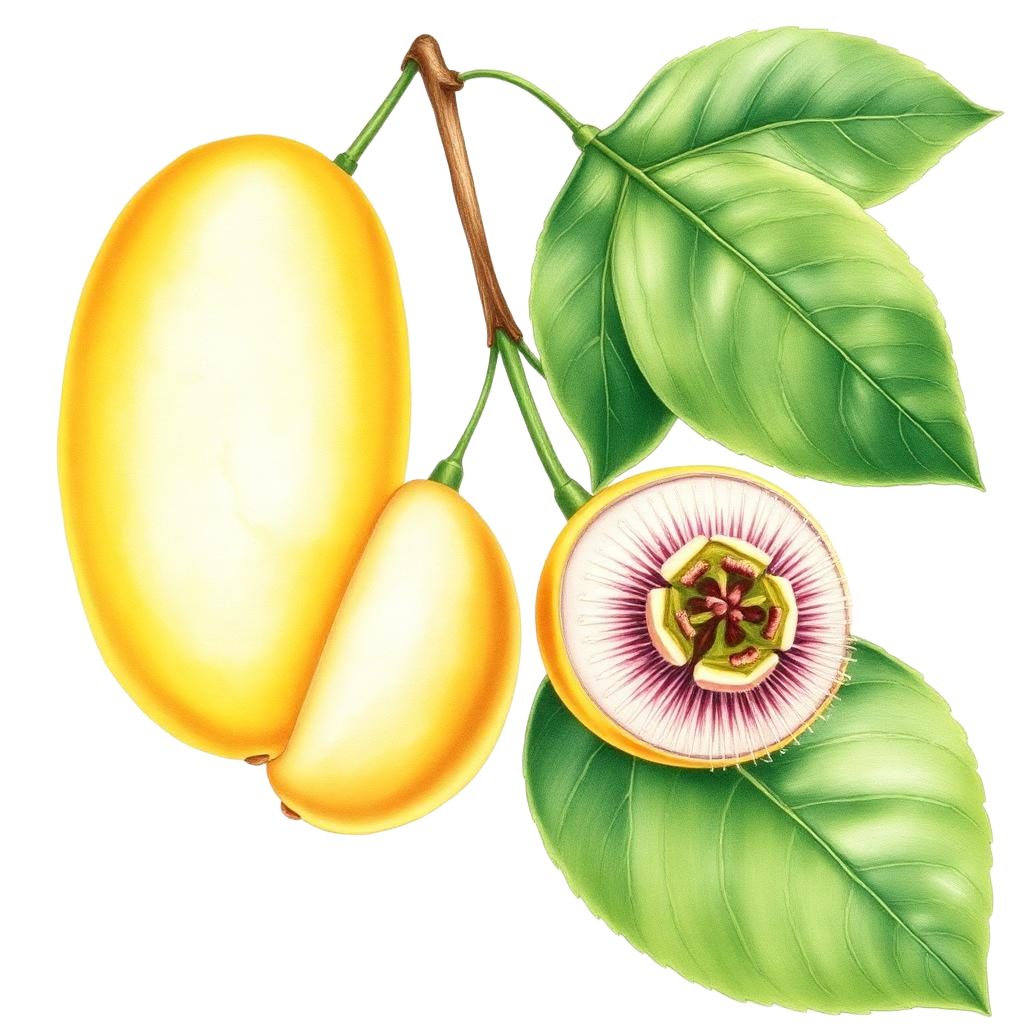
An elongated, banana-shaped passionfruit with soft pale-yellow skin. Inside: salmon-orange pulp and dark seeds.
👃 Aroma
Soft, green-tropical, lightly tart.
👅 Taste
Tangy apricot-passionfruit, noticeably less sweet, gently astringent.
Sweetness: ⭐⭐☆☆☆
🍽️ How to eat it
Rarely raw. Curuba's destiny is curuba en leche — blended with milk and a little sugar into one of Bogotá's and Medellín's most traditional soriceras (creamy juices). Also classic in sorbete de curuba at grandmother's Sunday lunch.
🧃 Drinks
Curuba en leche — always milk, almost never water. Ask for it at the Minorista lunch counters.
🏪 Buying tips
Skin should be pale yellow and slightly soft; green fruit is mouth-puckering. Delicate — eat within a couple of days.
💰 Price
Typically 4.000–7.000 COP/kg. Typical market price.
🌎 Local lore
Grows up to elevations where most tropical fruit gives up (2,000–3,200 m) — a passionfruit that shrugs off Andean cold. Practically unknown outside the Andes.
⚠️ Watch out
Mildly astringent raw; some find it heavy on an empty stomach.
🎉 Fun fact
Exported accidentally, this same vine became the invasive "banana poka" that now smothers native forests in Hawaii and New Zealand. It grows higher and colder than almost any other passionfruit, up to around 3,200 m, thriving where lowland tropical fruit fails.
⭐ Worth trying?
⭐⭐⭐⭐☆ In milk. It's the sleeper hit of Colombian juices.