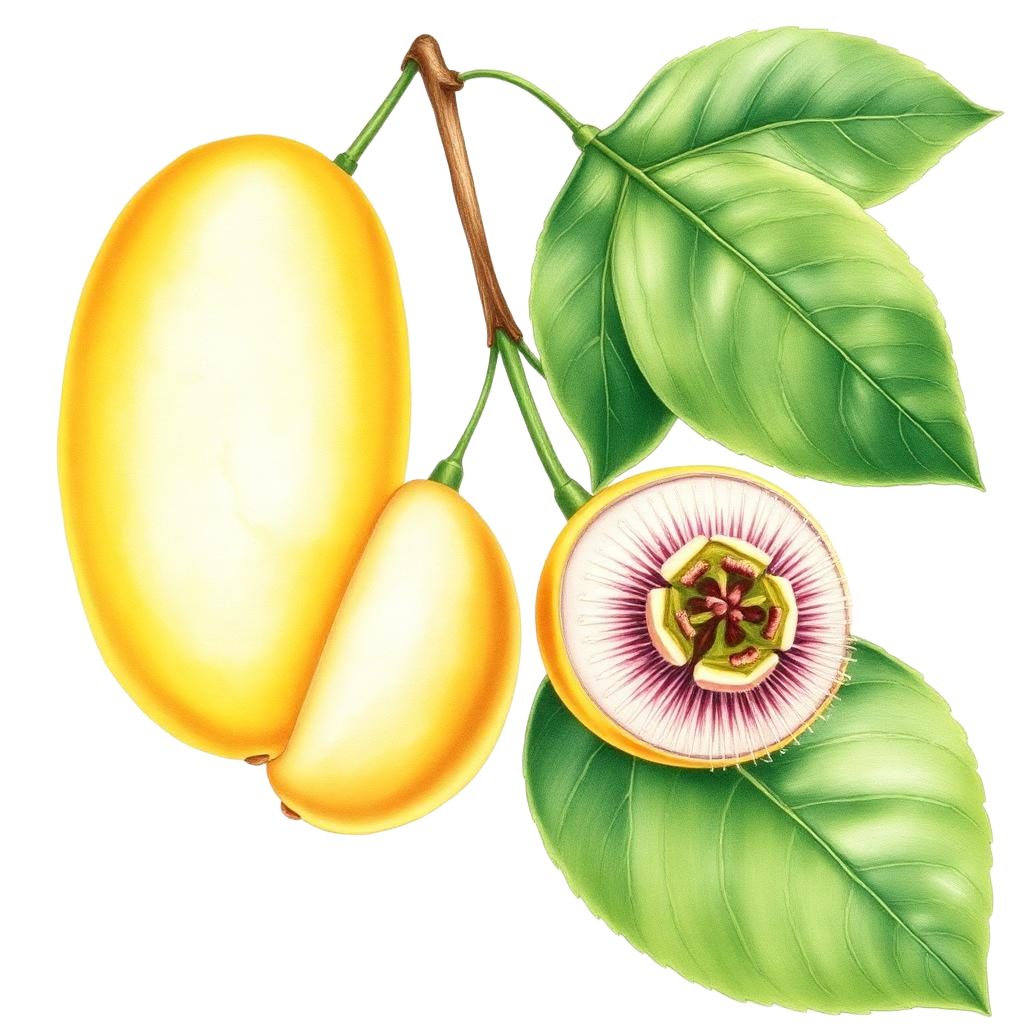
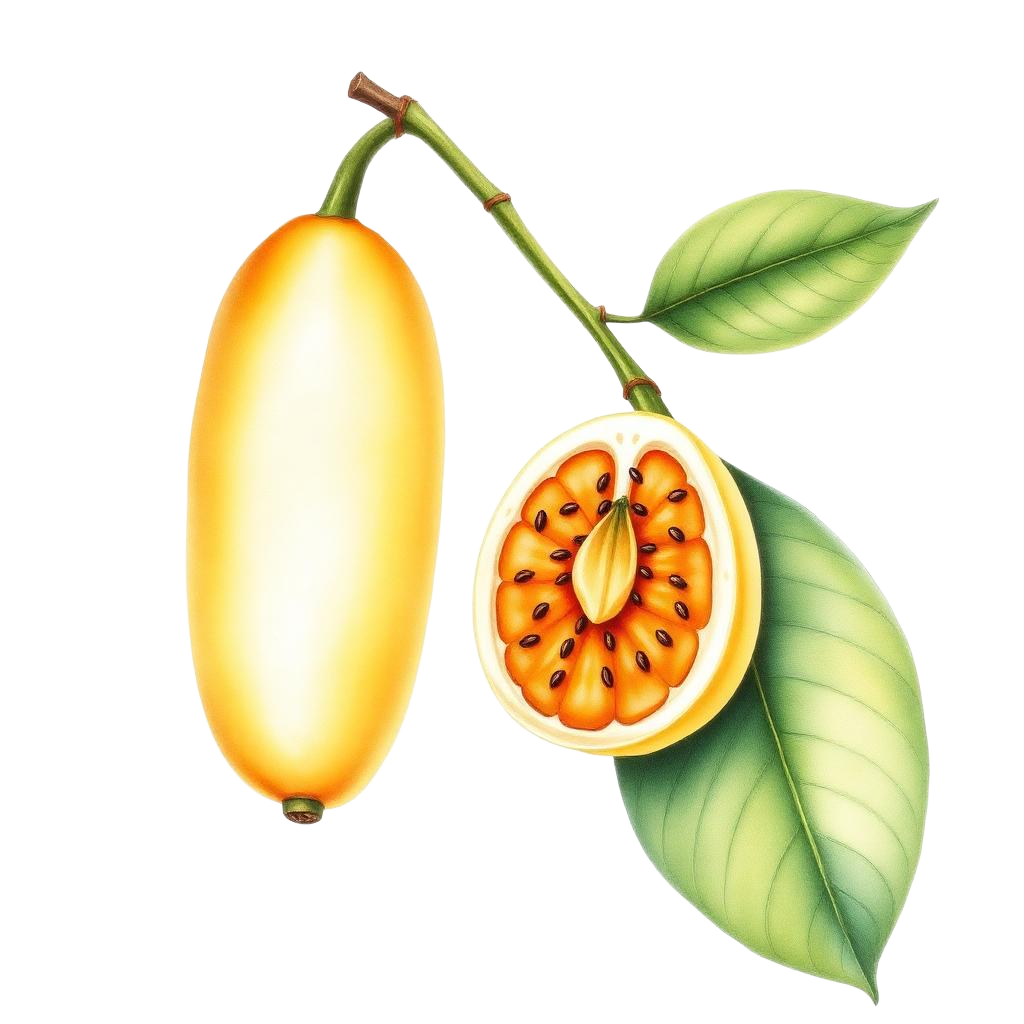
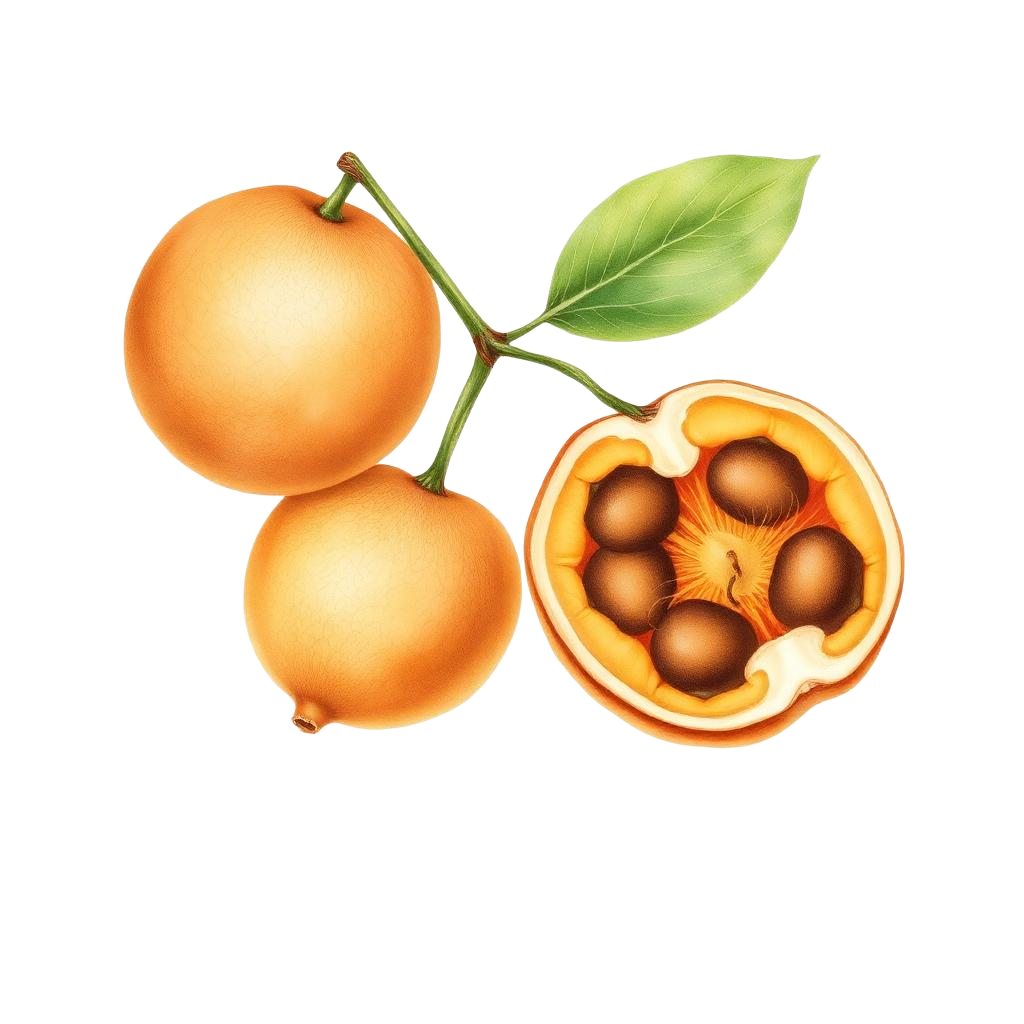
The largest passionfruit on Earth — a pale yellow-green rugby ball up to 30 cm long. Thick, melon-like white rind; a hollow center full of jelly-coated seeds.
👃 Aroma
Mild melon.
👅 Taste
Gentle — watermelon-rind freshness with light passionfruit perfume.
Sweetness: ⭐⭐☆☆☆
🍽️ How to eat it
Blended, seeds and pulp, into jugo de badea with milk or water; the white rind is even candied or cooked like a vegetable. Rarely eaten plain.
🧃 Drinks
Jugo de badea — a soothing, cooling coastal favorite.
🏪 Buying tips
Slight give and a honeyed smell at the stem = ripe. One fruit makes juice for a family.
💰 Price
Sold per unit; commonly a few thousand pesos each depending on size. Ask the vendor.
🌎 Local lore
On the Caribbean coast it's credited as a "fresco" — a fruit that cools the body. Too big, soft and thin-skinned to export.
⚠️ Watch out
None. Mild in every way.
🎉 Fun fact
The species name quadrangularis comes from its four-winged, square stem; in the tropics the young shoots and unripe fruit are even cooked as a vegetable. It produces the largest fruit of any Passiflora, commonly reaching 20 to 30 cm and up to a couple of kilos.
⭐ Worth trying?
⭐⭐⭐☆☆ Worth it as juice if you find one in season.