Back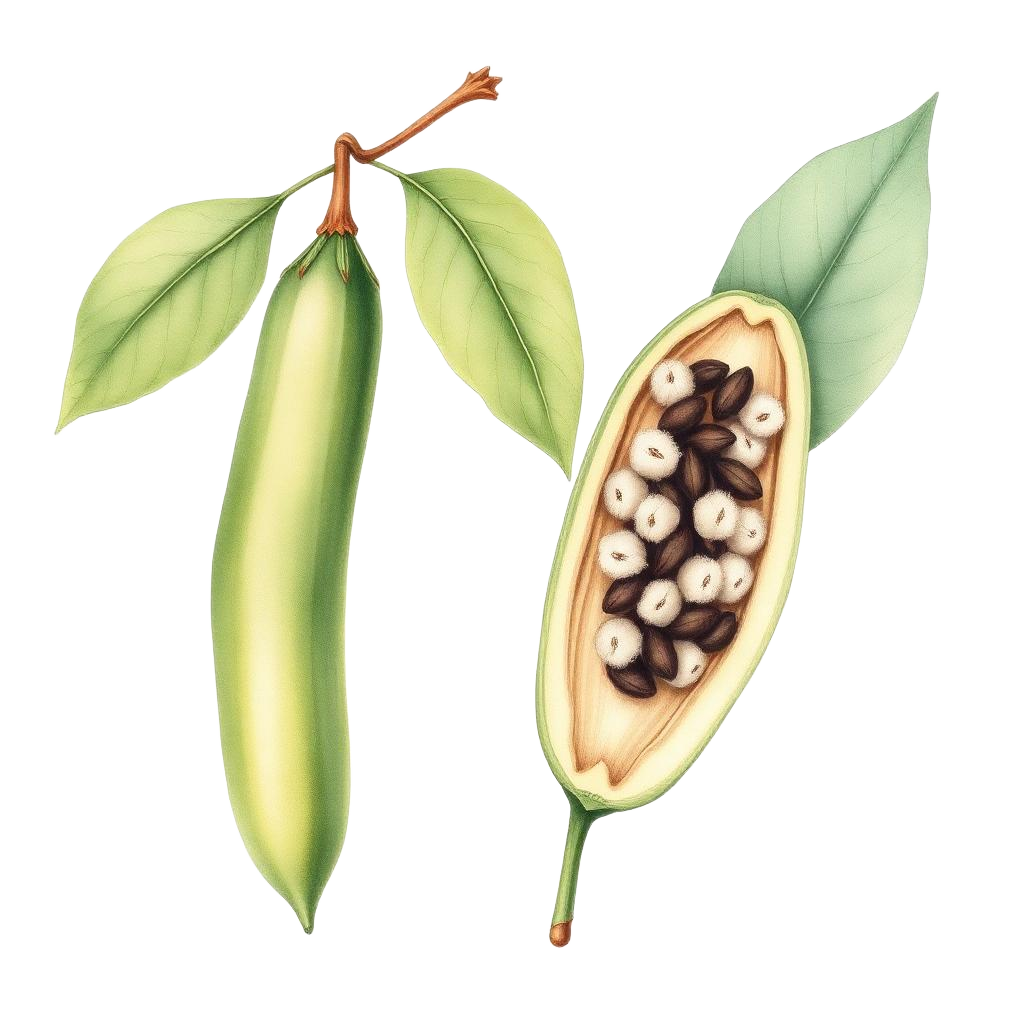

Colombian native Hardest to find abroad
Guama
Inga edulis
Field guide
🗓️ Season
J
F
M
A
M
J
J
A
S
O
N
D
● peak · ○ available · — scarce
Recent visitors (last 30 days)
Be the first to log a sighting
🗺️ Where it grows
Native to the Amazon basin and Andean foothills of South America, including Colombia.
Elsewhere in the world: Also grown in Guatemala, Belize, El Salvador, Honduras, Nicaragua and Costa Rica.
Altitude: 0–1,800 m
01k2k3k4k5k m
👀 Look
A giant green bean pod — 30 to 60 cm — with a row of black seeds inside, each wrapped in white cottony fluff.
👃 Aroma
Faint vanilla-green.
👅 Taste
The fluff tastes like vanilla ice cream diluted with cloud — subtle, sweet, cottony.
Sweetness: ⭐⭐⭐☆☆
🍽️ How to eat it
Crack the pod, pull out a seed, eat the white fluff off it like cotton candy, discard the seed. A childhood farm snack.
🧃 Drinks
None.
🏪 Buying tips
Pods should be green and heavy, seeds rattling slightly. Eat same day.
💰 Price
A pod or bundle for a couple thousand pesos. Ask the vendor.
🌎 Local lore
Inga trees fix nitrogen (naturally fertilize the soil) and shade coffee farms — guama is literally the fruit of Colombia's coffee landscape. Impossible to export: the fluff wilts in hours.
⚠️ Watch out
Don't eat the seeds. Messy fun.
🎉 Fun fact
The tree is a nitrogen-fixing legume, deliberately planted across Colombia's coffee farms to shade the bushes and feed the soil — the "ice cream bean" is a working farm tool. It is the backbone of "Inga alley cropping," a sustainable agroforestry system that lets farmers grow crops without slash-and-burn.
⭐ Worth trying?
⭐⭐⭐⭐☆ If you see one, yes — it's a texture you'll never meet again.