Native to Southeast Asia (Malaysia and Indonesia); introduced to Colombia's warm lowlands, especially around Urabá.
Elsewhere in the world: Also grown in Thailand, Vietnam, the Philippines, Sri Lanka, India and Australia.
Altitude: 0–600 m
01k2k3k4k5k m
Where it grows wildWhere it's farmed todayMedellín
👀 Look
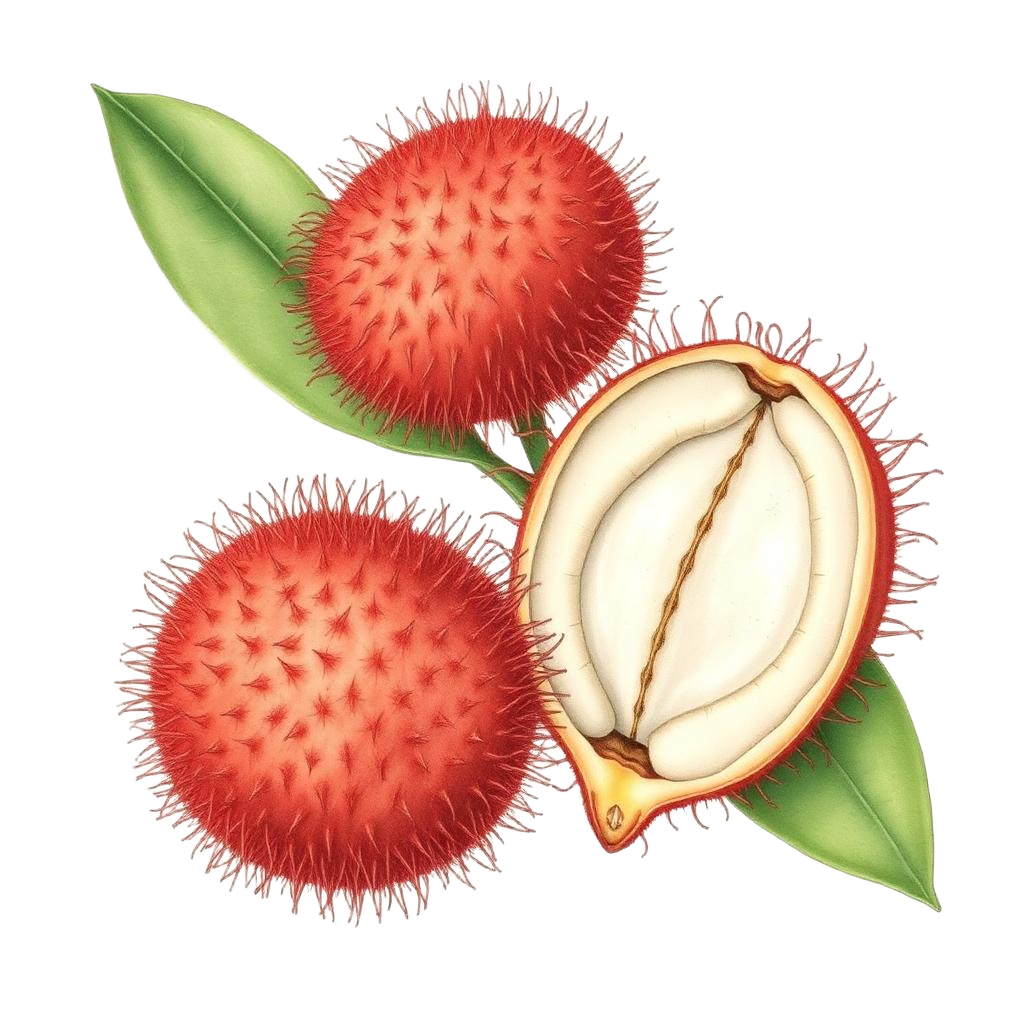
A crimson golf ball covered in soft neon hairs. Inside, a translucent pearl of flesh around a single almond-shaped seed.
👃 Aroma
Light rose-grape.
👅 Taste
Lychee's twin — sweet grape + rose water, juicy and springy.
Sweetness: ⭐⭐⭐⭐☆
🍽️ How to eat it
Pinch-twist the shell (or nick it with a thumbnail), pop the pearl, eat around the seed. Tourist mistakes: knife-stabbing it dramatically, or chewing the bitter seed skin that sometimes clings to the flesh.
🧃 Drinks
Not a juice fruit here.
🏪 Buying tips
Red shell with green-tipped hairs = fresh; black, dry hairs = old. Eat within 2–3 days.
💰 Price
3.500 COP (our vendor's quote). Confirm unit — usually per pound.
🌎 Local lore
Grown around Urabá and the lowland coffee belt, rambutan is Colombia's proof that its climate can out-tropic the tropics. "Mamón chino" — "Chinese mamoncillo" — tells you exactly how locals first made sense of it.
⚠️ Watch out
Don't eat the raw seed.
🎉 Fun fact
Its name comes straight from the Malay/Indonesian word rambut, meaning "hair" — literally "the hairy one." Its red spikes are called "spinterns" and, despite looking sharp, are soft and pliable.
⭐ Worth trying?
⭐⭐⭐⭐☆ Cheaper and fresher than you'll ever find it back home.