Back
Colombian native

Mamey

Mammea americana

Mamey (also mamey de Cartagena)
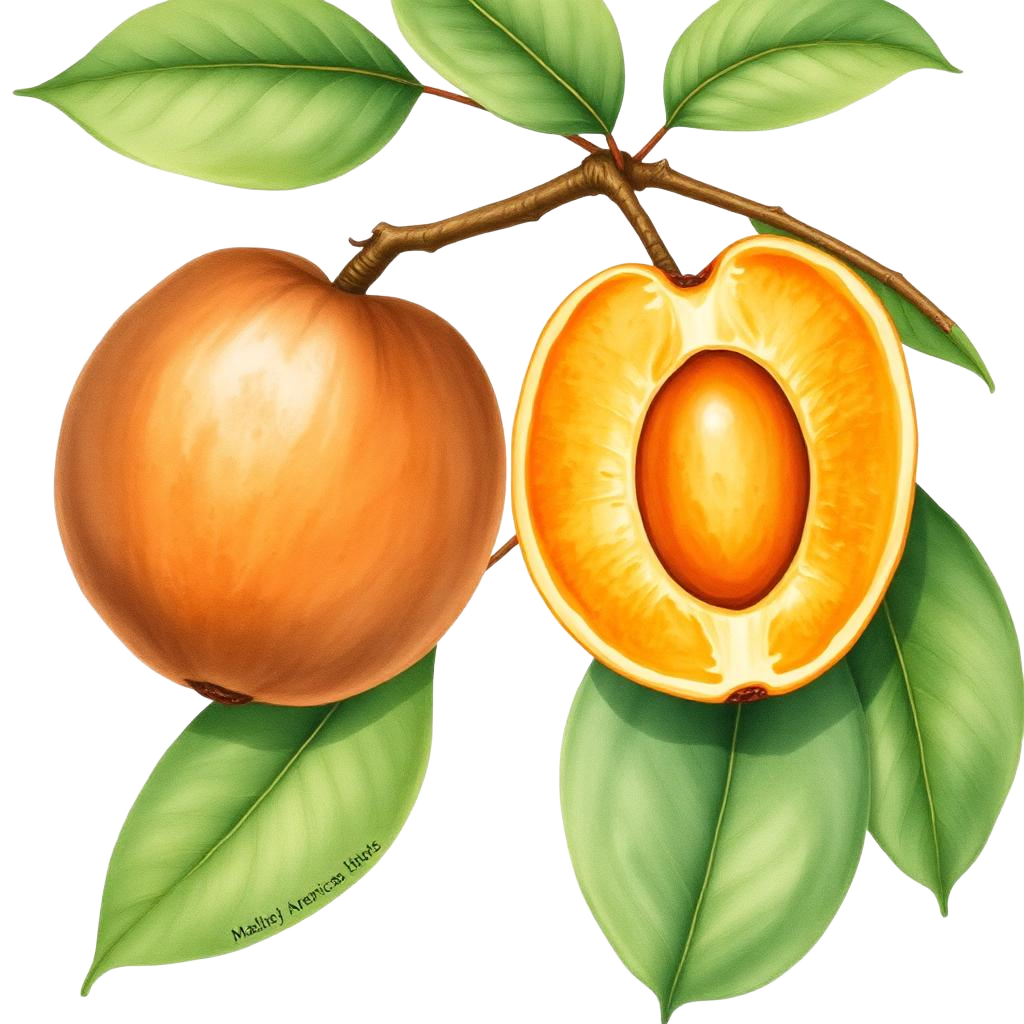
Mamey botanical illustration
Mamey real fruit photo
Mamey cut open, showing the inside
Field guide
🗓️ Season
J
F
M
A
M
J
J
A
S
O
N
D

● peak · ○ available · — scarce

Recent visitors (last 30 days)

Be the first to log a sighting

🗺️ Where it grows

Native to the Caribbean islands and the warm coasts of northern South America, including Colombia's Caribbean lowlands.

Elsewhere in the world: Also grown in Guatemala, Belize, El Salvador, Honduras, Nicaragua and Costa Rica.

Altitude: 0–1,000 m
01k2k3k4k5k m
MedellínBogotáCartagenaCaliLeticia

Caribbean lowlands, and warm valleys of Antioquia.

👀 Look

A grapefruit-sized sphere in matte brown suede. Under a thick bitter rind: firm apricot-colored flesh around one to four large seeds.

👃 Aroma

Apricot and honey when ripe; nearly silent before.

👅 Taste

Apricot + red berry + a touch of almond bitterness at the rind. Firm like a ripe peach.

Sweetness: ⭐⭐⭐⭐☆

🍽️ How to eat it
Peeled completely (the rind and the film around the flesh are bitter), sliced, sometimes with sugar or in dulce de mamey preserves.
🧃 Drinks
Occasional jugo de mamey with milk on the coast.
🏪 Buying tips
Scratch test — vendors nick the skin; orange underneath = ripe, green = wait. Heavy fruit is juicier.
💰 Price
Per unit, commonly 3.000–6.000 COP. Typical market price.
🌎 Local lore
Don't confuse it with Central America's mamey sapote — different tree entirely. Traditional Caribbean medicine used the seed and rind against parasites; you should use them against nothing and eat only the flesh.
⚠️ Watch out

Rind and seed are mildly toxic — flesh only. A heavy fruit; share one.

🎉 Fun fact
Its intensely fragrant flowers were once distilled in the French Caribbean into a liqueur poetically called Eau de Créole. Nearly every part of the tree is a natural insecticide, used in the Caribbean to kill ticks, fleas and chiggers.
Worth trying?

⭐⭐⭐☆☆ Worth trying once, especially if you love apricots.