Native to Mexico and Central America; widely grown in Asia and now cultivated in Colombia.
Elsewhere in the world: Also grown in Vietnam, China, Thailand, the Philippines, Indonesia and Malaysia.
Altitude: 0–1,500 m
01k2k3k4k5k m
Where it grows wildWhere it's farmed todayMedellín
👀 Look
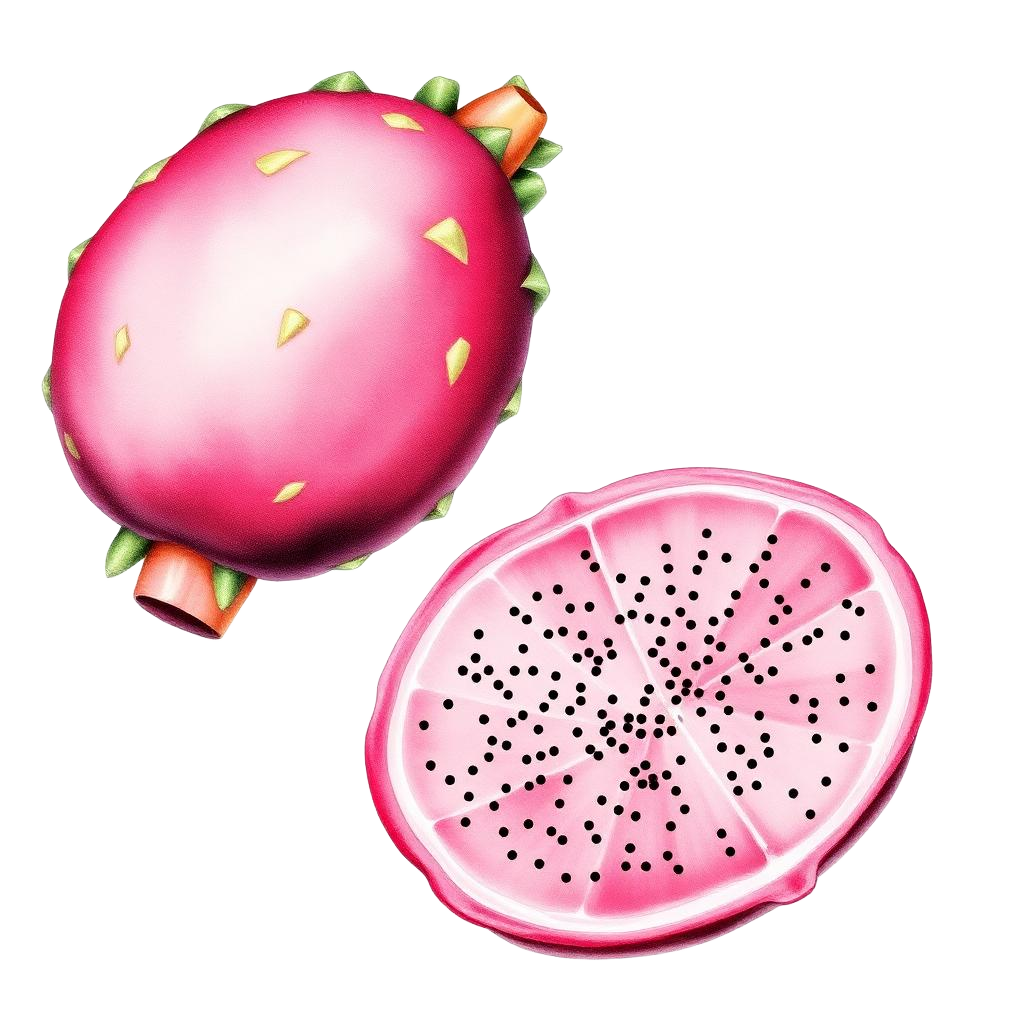
The Instagram one — hot-pink with green flame scales; flesh white or magenta with black seeds.
👃 Aroma
Nearly none.
👅 Taste
Mild — watery kiwi-melon, less sweet than the yellow.
Sweetness: ⭐⭐⭐☆☆
🍽️ How to eat it
Spooned, in fruit salads, or blended for its psychedelic color.
🧃 Drinks
Smoothie bowls and jugos aimed squarely at the camera.
🏪 Buying tips
Even color, slight give, no shriveled scales.
💰 Price
Similar premium range to the yellow. Typical market price.
🌎 Local lore
In Colombia the yellow is king; the red is the import-culture cousin. Taste them side by side and you'll see why locals are loyal.
⚠️ Watch out
Magenta-fleshed ones turn everything (everything) pink for a day. Don't panic.
🎉 Fun fact
Its cactus flowers open for one night only and are pollinated in the wild by bats and moths — the fruit is a desert bloom's morning-after gift. The vivid magenta of red-fleshed types comes from betalains, the same pigment as beetroot, not from anthocyanins (the red-purple pigment in berries and red cabbage).