Warm Andean slopes and valleys, such as Boyacá, Cundinamarca and Valle.
👀 Look
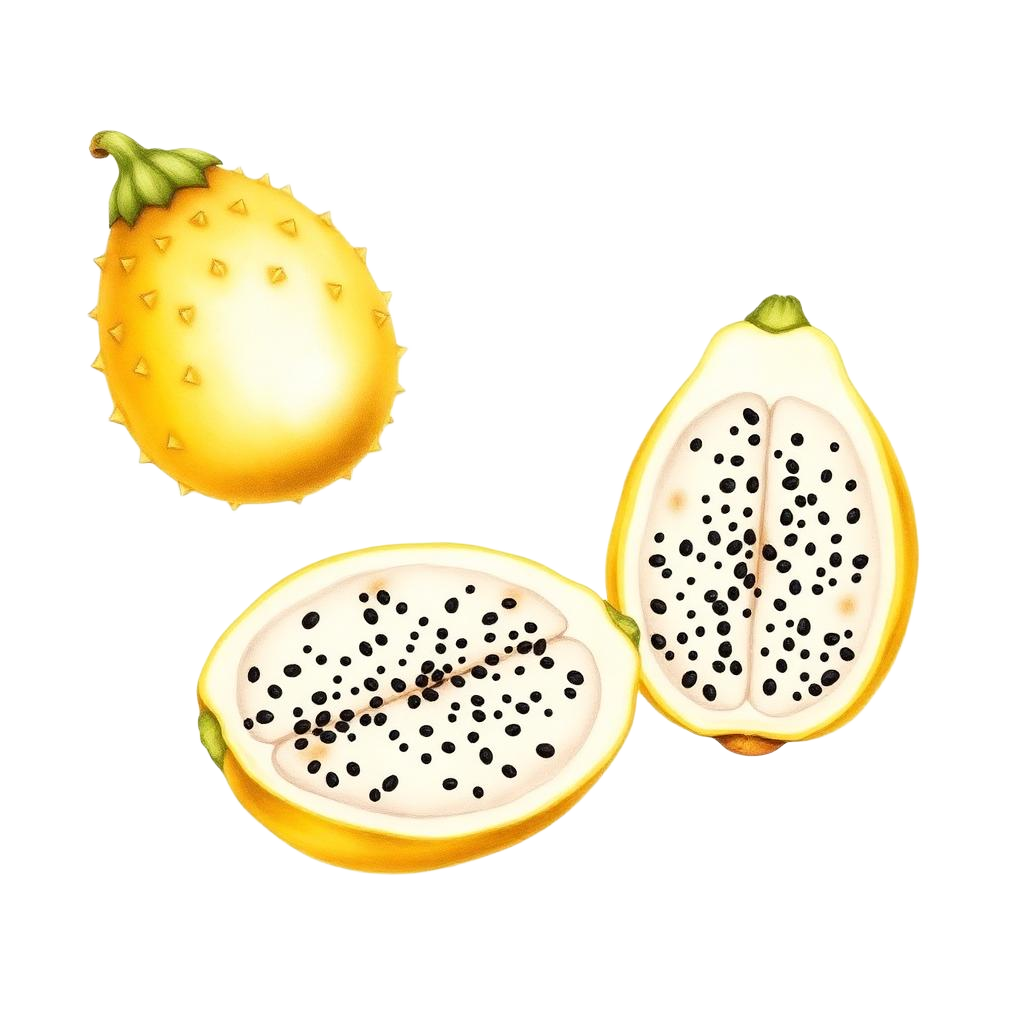
A knobby golden hand grenade (spines removed before sale). Slice it open: glassy white flesh peppered with crunchy black seeds.
👃 Aroma
Delicate honeysuckle.
👅 Taste
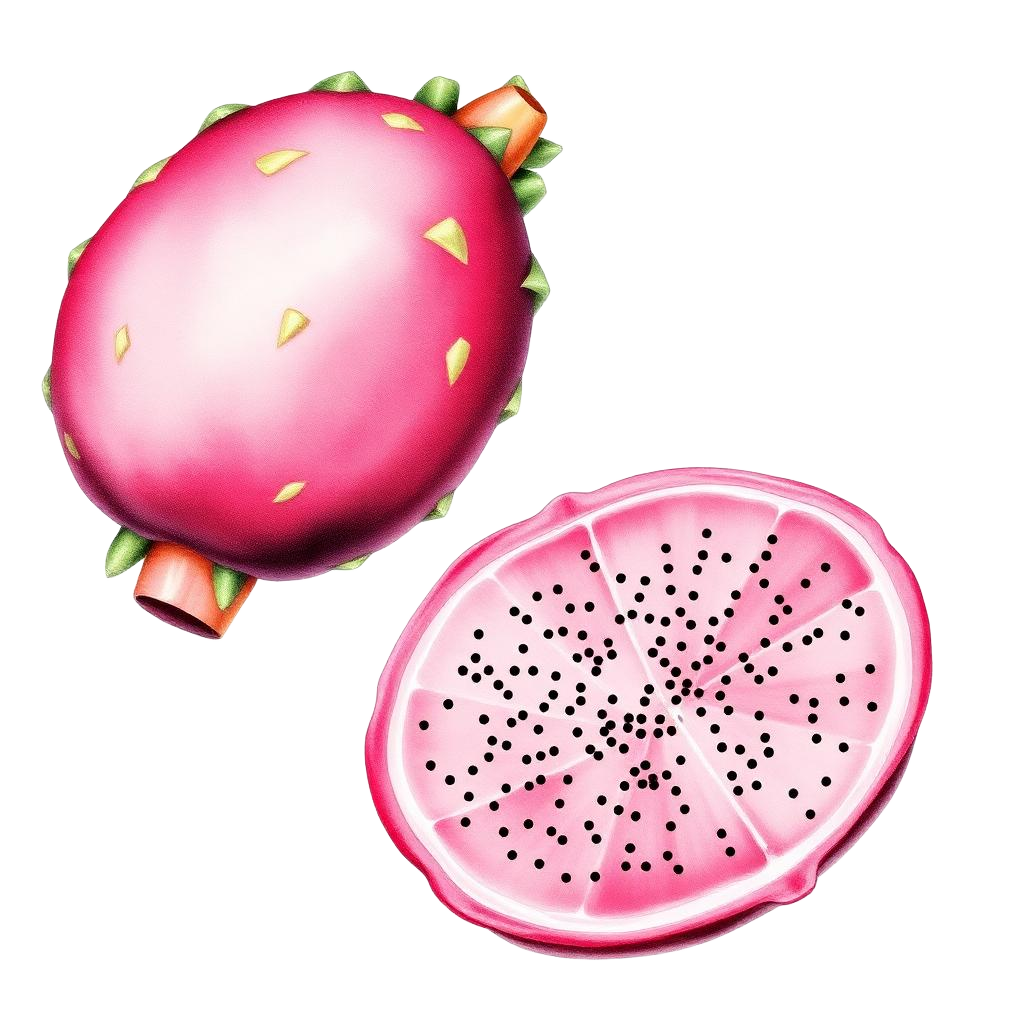
Far sweeter and more perfumed than the red kind — pear + kiwi + honey water.
Sweetness: ⭐⭐⭐⭐☆
🍽️ How to eat it
Halved and spooned, ideally chilled. Also famous as a natural digestive — more on that below.
🧃 Drinks
Rarely juiced locally (it's pricey); when it is, it's subtle and lovely.
🏪 Buying tips
Deep even yellow, knobs slightly softened. Green-tipped fruit ripens at home in a few days. Handle gently — it bruises.
💰 Price
One of the market's premium fruits: commonly 10.000–16.000 COP/kg. Typical market price.
🌎 Local lore
Colombia's yellow pitahaya is exported at luxury prices to Asia and Europe — the ones at the Minorista cost a fraction of what they fetch in Tokyo. Fair warning, delivered with love by every Colombian grandmother: eat a whole large one and it will keep you regular. Startlingly so.
⚠️ Watch out
The laxative effect is real with enthusiasm-sized portions. Share one.
🎉 Fun fact
Its species name megalanthus means "big flower": this night-blooming cactus bears one of the largest blooms of any cactus, opening for a single night and pollinated by moths and bats.
⭐ Worth trying?
⭐⭐⭐⭐⭐ Sweeter than any dragon fruit you've had abroad.