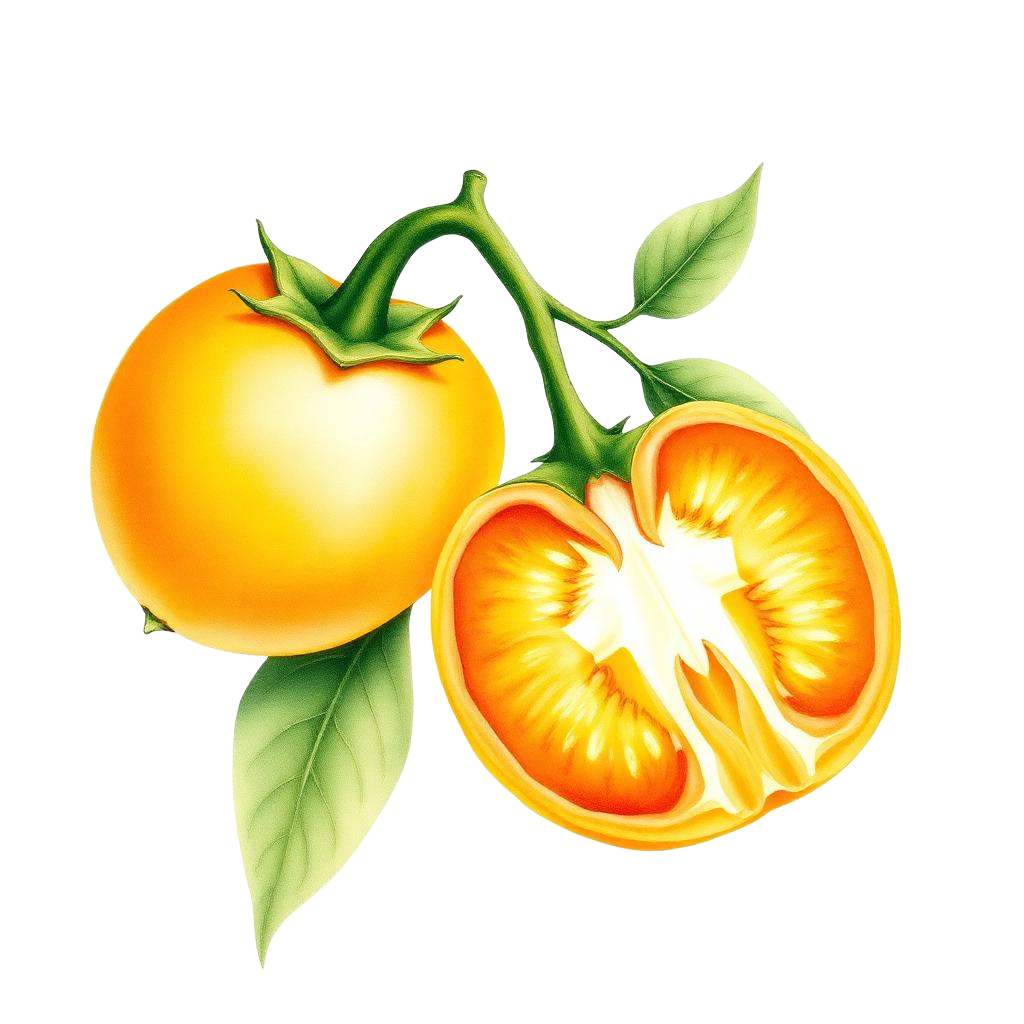
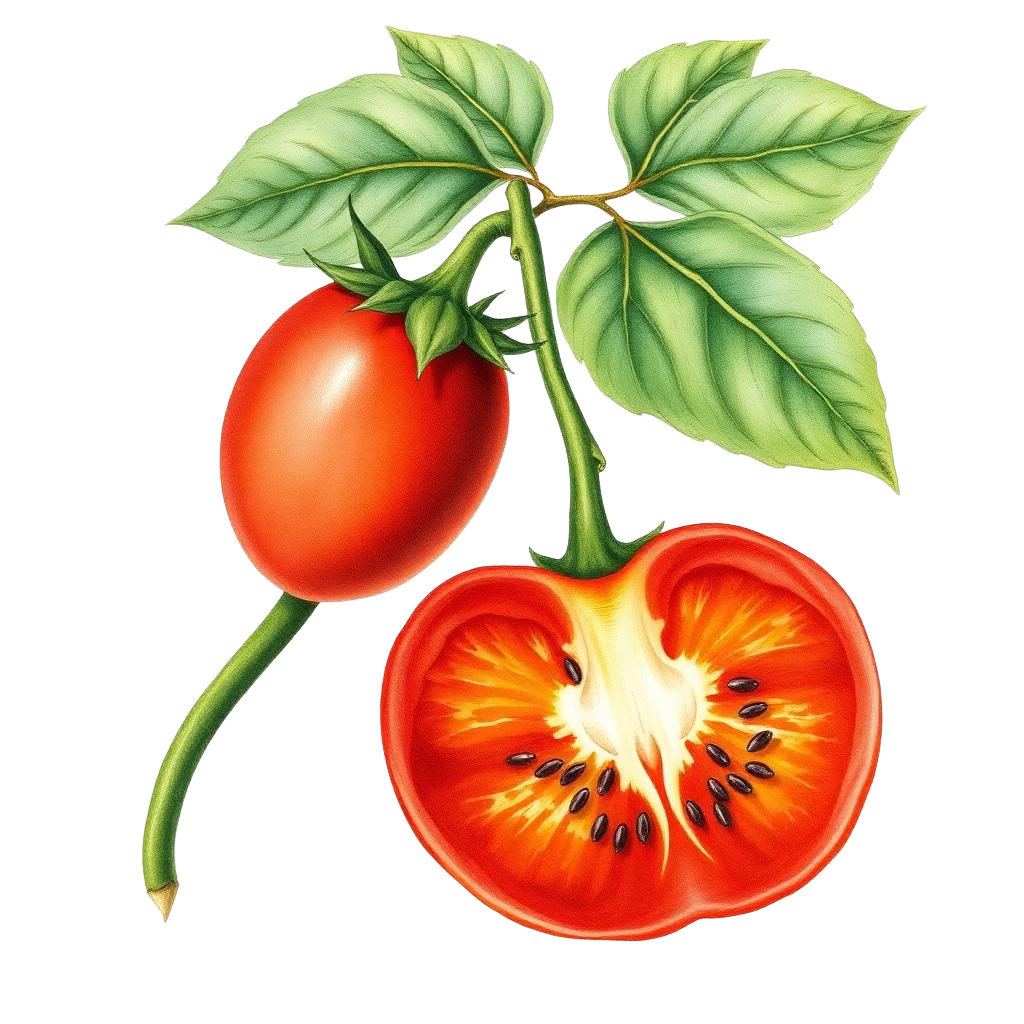
Same egg shape, but peachy-orange with golden flesh and paler seeds. At the Minorista you'll see the two colors piled side by side — a photo classic.
👃 Aroma
Softer and fruitier than the red.
👅 Taste
Noticeably sweeter and less acidic — apricot and mango notes over the tomato base.
Sweetness: ⭐⭐⭐☆☆
🍽️ How to eat it
This is the one locals will eat raw with a spoon, sometimes with a pinch of sugar. Also the choice for milk-based juice because it curdles less and drinks smoother.
🧃 Drinks
Tomate de árbol en leche — order it once with milk and panela (unrefined whole-cane sugar) and you'll understand why it's a breakfast institution.
🏪 Buying tips
Deep uniform orange, no green shoulders. Slightly softer when ripe than the red type.
💰 Price
Same as the red: 4.000–6.000 COP/kg. Typical market price.
🌎 Local lore
Growers around Antioquia's highlands supply both colors year-round — there's no season to miss.
⚠️ Watch out
Same staining skin; same rule — spoon, don't bite.
🎉 Fun fact
Botanically identical to the red type — the golden color is just a different cultivar of the same species, Solanum betaceum. The golden variety has fewer anthocyanins (the purple-red pigments that color the red type) than the red one, so it stains less and tastes sweeter, perfect to eat raw with a spoon.
⭐ Worth trying?
⭐⭐⭐⭐☆ Try one of each color back-to-back; the difference is bigger than you'd guess.